|
|
Magazine Issue 10 - Spring 2000
|
||
 Balfour Beatty – Proud to be British? Balfour Beatty – Proud to be British?New Labour and UK corporate complicity in potential human rights disaster. By Kate Geary You’re sure to have heard of Balfour Beatty. You may have seen their name on vast hoardings at construction sites all over the UK. You might know them as the construction company involved in the Honiton-Exeter A30 road – a site of protester evictions. (The company specialises in ‘privatised’ roads, having built four Design-Build-Finance-Operate roads in the UK so far.) Or, going back a few years, you might remember the name Balfour Beatty linked with the Pergau dam scandal, where British aid lubricated arms deals with Malaysia. Even if none of this rings a bell, you’re sure to hear the name Balfour Beatty over the coming year. Why? The UK construction company is part of a consortium contracted to build another dam – at least as scandalous as Pergau. And yes, the project is backed yet again by British taxpayers’ money. It’s called the Ilisu dam, to be built imminently in South-East Turkey – better known to some as Kurdistan. Even the usually dodgy World Bank won’t touch this project. The Ilisu dam would affect some 36,000 Kurdish people - flooding their homes and lands. This is very convenient for the Turkish government, which is waging a not-so-secret war against the Kurdish people. A human rights delegation which visited the area in September last year found a widespread perception that the Ilisu dam is motivated primarily by a desire to destroy the Kurds as an ethnic group. The ongoing destruction of Kurdish homes and villages, the destruction of centuries-old social and familial networks and the shepherding of Kurds into planned urban enclaves, all contribute to the forced assimilation of Kurds into the Turkish state. "We don’t want this dam… This is where I belong," one of the Kurdish people to be affected by the dam told the human rights delegation. "I do not want the dam. I was born here. My identity is here in this village. Our grandfathers and great-great grandfathers were born here," said another. But the land-grab has already begun. The Turkish military has already evicted, at gun-point, nineteen villages in the area to be flooded by the dam’s reservoir. The dam will also inundate the 10,000-year-old town of Hasankeyf, home to historical treasures including cave churches, ornate mosques and Islamic tombs. Over the course of millennia, layers of civilisation have been built up over each other in the valley bed and surrounding caves. Destroying the Kurdish people’s most important cultural sites, such as Hasankeyf, is seen by local people as a yet another tactic to destroy the Kurds as an ethnic group. Apart from the dam’s devastating local impacts – on the environment, the people and their culture – another ugly consequence rears its head: water wars. The dam is to straddle the Tigris river, upstream of Iraq (that well-known friend of Western governments) and Syria and threatens to disrupt much-needed water supplies to those countries. The Syrian government has already protested the UK government’s involvement in the dam. These are only some of the many reasons why the UK government shouldn’t touch this dam project with a bargepole. The UK-based NGO, the Kurdish Human Rights Project, says: "International support for the project at this stage would be a tantamount to support for a potential human rights disaster. We are, to be frank, staggered that the British government, alongside its European counterparts, can seriously be considering providing financial backing to this project, in the face of such damning concerns." Yet, in December 1999, the Labour government announced that it was "minded" to provide £200 million in export credits to support Balfour Beatty’s lucrative contract for Ilisu. Anyone with any sense of history would think this is madness. Balfour Beatty? That well-known Tory party donor which, along with that other star donor, Tarmac, won 49% of Tory road-building contracts in the early 1990s? Maybe Balfour Beatty is simply the best that British business can offer and so deserves our public support. Let’s have a brief glimpse at the company’s recent history in the UK. Just last year, in February 1999, Balfour Beatty was fined a record £1.2 million over health and safety breaches during its construction of a new rail link to Heathrow airport. The fine was the highest ever meted out by the Health and Safety Executive (HSE) for incidents involving no loss of life. The judge called the incident "one of the worst civil engineering disasters in the United Kingdom in the last quarter of a century… It is a matter of chance whether death or any serious injury resulted from these very serious breaches." Balfour Beatty was one of two companies contracted to construct tunnels for the £550 million Heathrow rail link. One of the tunnels collapsed in October 1994, crushing the Underground Piccadilly Line and leaving a crater that dragged down car parks and shook buildings. The cancellation of flights alone caused by the accident cost British Airways some £50 million. Only a month later, in March 1999, Balfour Beatty was again fined by the HSE – this time £0.5 million for health and safety breaches that caused a train to derail between Witham and Kelvedon in 1997. The judge in this case said: "A very substantial risk to the public was caused." The judge said he would have imposed a larger fine, but for, among other things, the company’s good record. It’s hard to understand how the judge gained this impression. In the previous eight years, Balfour Beatty had been repeatedly fined in cases involving the death of several workers. In 1993, the company was fined £17,500 by the HSE for breaching safety rules at its Derbyshire foundry, where a worker was crushed to death. But by far the most serious incidents occurred during the construction of the Channel Tunnel. Balfour Beatty was one of five UK companies contracted to build the tunnel. All five were found guilty of failing to ensure the safety of seven workers who were killed during the construction period. Each of the contractors was fined between £40,000 and £125,000. In one case the prosecutor claimed that the breaches were a continuing danger which the contractors had done nothing to prevent. Commenting on the circumstances surrounding the death of a 26-year-old worker, the judge said: "The failure in this case is one of the worst this court has heard about in the past years. This accident happened because the safety procedures in place were not properly supervised and carried out." Well, maybe Balfour Beatty gives value for money? It was one of five UK companies involved in the construction of the now-infamous Jubilee Line extension. On its completion at the end of 1999, the project was 60% over budget, costing £3 billion instead of the original estimate of £1.8 billion, and was 19 months behind schedule. Well, at least it’s concerned about the environment then? The latest project completed by Balfour Beatty in the UK was the Cardiff Bay Barrage – a 1.1km dam replacing tidal mudflats with a 500-acre freshwater lake. Local people, Friends of the Earth and even the European Commission criticised the project for its impact on the environment. The mudflats flooded by the dam were important habitat for birds, including the threatened redshank and dunlin. And for good measure, the Environment Agency last year named Balfour Beatty as one of the UK’s top twenty polluting companies on its ‘list of shame’. So why is Labour supporting Balfour Beatty and the Ilisu dam, in the face of widespread criticism, the company’s historical links with the Tories and a very much less-than-perfect corporate record? There are two theories going around. One, brought to you by Private Eye, points out: • In recent years Balfour Beatty has transformed itself into one of ‘new’ Labour’s favourite companies. One of its executives, Martin Print, was seconded to the Department of Trade and Industry’s ‘innovation unit’ as soon as Labour won the general election. Two other Balfour Beatty staff, Colin Ostler and Alastair Kennedy, have accompanied construction minister Nick Raynsford on jaunts to Jordan, Egypt and the Philippines. • Sir Malcolm Bates, architect of the private finance initiative (PFI) and one of Blair’s heroes, was chosen by the government this year as the ideal man to chair London Transport. Until his appointment he was a director of BICC – the parent company of Balfour Beatty. • Balfour Beatty’s political lobbying is conducted by GJW Government Relations, which employs such luminaries as Karl Milner, formerly an adviser to Gordon Brown, and Roger Sharp, who previously worked in Labour’s ‘business unit’. GJW is one of Labour’s most loyal sponsors, and has regularly booked tables at the party’s ‘gala fund-raising dinners’. The other (probably complementary) theory is that Tony and his Euro-buddies are desperate to welcome Turkey into the EU fold - regardless of human rights concerns. What better way to encourage co-operation than ‘constructive engagement’ (that tired old phrase that corporations and governments use for doing business in Burma)? And Turkey is, after all, a promising market for some of Britain’s best, not least given its plans to up its arms budget to $30 billion over the next eight years. And we know how Tony just loves the arms dealers… Protest at this most morally bankrupt of New Labour "ethical" foreign policy jaunts is mounting. Find out what you can do. Contact: For more information: Kurdish Human Rights Project, Suite 319 Linen Hall, 162-168 Regent Street, London W1R 5TB, email: khrp@khrp.demon.co.uk, web-site: http://www.khrp.org. To pressure ECGD about its backing for Ilisu, send a fax to Tony Blair, Robin Cook and Stephen Byers. For a sample contact Nick Hildyard at The CornerHouse, PO Box 3137, Station Road, Sturminster Newton, Dorset DT10 1YJ, email: cornerhouse@gn.apc.org, web-site http://www.icaap.org/Cornerhouse/ Check out the ECGD web-site: http://www.ecgd.gov.uk/whatsnew/default.htm Bits of this article are based on a new report, "Dams Incroporated: A Record of Twelve European Dam Building Companies" which profiles the likes of Balfour Beatty and Siemens in their activities in Europe and the South. If you’d like a copy please contact Kate Geary or Matt Grainger on katmatt@gn.apc.org Photo: Kurdish Human Rights Project Pic: Paul Vernon 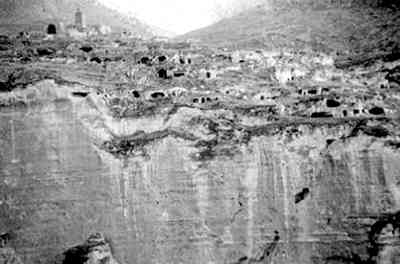 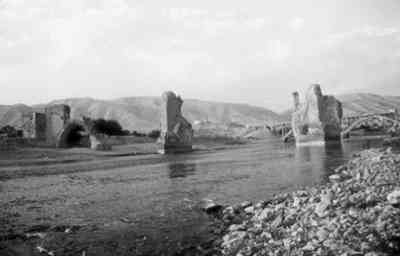 |